



If you've ever thrown away a candle jar and felt vaguely guilty about it, you're not alone. Australians burn through millions of candles a year — and the vast majority end up as glass in landfill, because they weren't designed to do anything other than get thrown away.
Refillable candles exist to change that equation. But are they actually better? More expensive to start? Do they perform as well? We're going to answer those questions directly — no fluff, no marketing speak. Just an honest comparison across the five things that actually matter.
1. Upfront Cost vs Long-Term Cost
Disposable Candles
A mid-range single-use candle in Australia typically runs between $30 and $60. You buy it, burn it, throw it away, buy another one. If you burn a candle a month, you're spending roughly $360 to $720 per year — and that assumes you're buying decent quality, not the cheap ones from a supermarket.
Refillable Candles
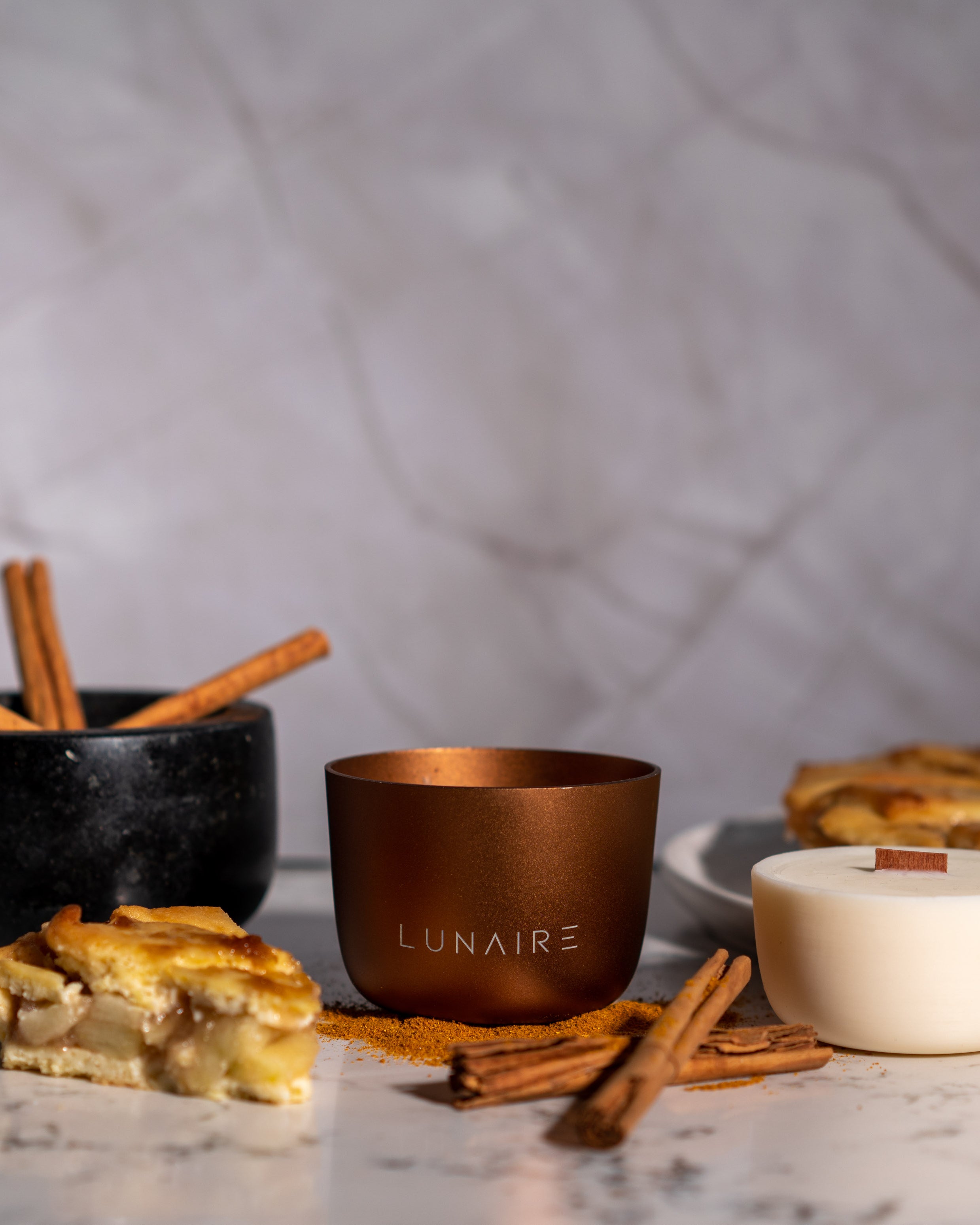
A Lunaire refillable candle vessel costs more upfront than a comparable single-use candle — because it's designed to last a lifetime, not a month. But the refill inserts cost significantly less than buying a new candle each time. Over a 12-month period, the cost difference is noticeable. Over two or three years, it's substantial.
|
💰 The Real Maths Buying a quality refillable vessel once and topping it up regularly costs less than replacing a single-use candle at the same frequency. Year one: roughly comparable, depending on the vessel cost. Year two and beyond: refillable wins clearly. The longer you burn candles, the better the value of refillable becomes. |
2. Environmental Impact
Disposable Candles
Every single-use candle means a new vessel produced — typically glass, which requires significant energy to manufacture. When the candle burns down, the jar usually can't be recycled domestically (the wax residue, the wick hardware, and the size all create complications). It goes in the bin. Multiply this by millions of Australians buying candles regularly, and the waste picture isn't pretty.
Paraffin wax — the most common base in mass-market candles — is a petroleum derivative. It's not renewable, and burning it produces more soot and particulates than plant-based alternatives.
Refillable Candles
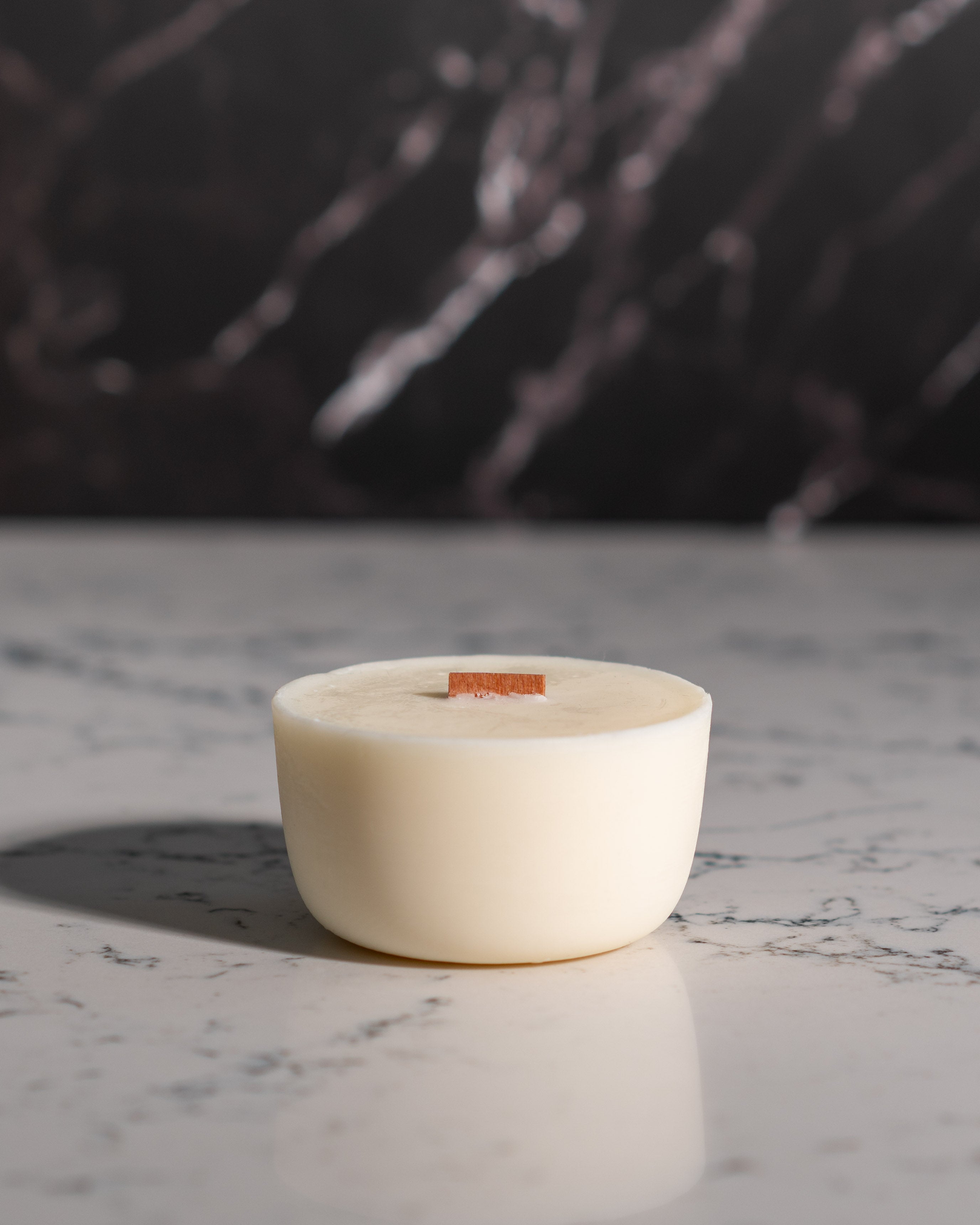
The vessel is produced once. You keep it. The refill inserts are smaller, require less raw material to produce, and when made with plant-based wax (soy or coconut), they come from renewable sources. The ongoing environmental footprint per burn is dramatically lower than single-use.
It's not hyperbole to say that switching to refillable candles is one of the simpler, more painless environmental upgrades you can make in your home. It doesn't require a behaviour change — you're still burning candles. You're just generating far less waste doing it.
|
|

3. Burn Quality and Performance
Disposable Candles
Quality varies enormously. At the lower end of the market, you're getting paraffin wax, synthetic fragrance, and a thin cotton wick that may tunnel (burn down the centre without melting the sides, wasting most of the wax). The throw — how well the scent fills the room — is often poor or inconsistent.
Mid-to-high-end single-use candles can be excellent — well-formulated soy or coconut wax, high-quality fragrance, good burn performance. But you're paying for that quality repeatedly every time you replace the candle.
Refillable Candles
A quality refillable candle brand — like Lunaire — puts the same care into their refill inserts as into the vessel itself. Soy or coconut wax, premium fragrance, properly sized wick for the insert dimensions. The result is a consistent, high-quality burn every time you refill.
Because refillable candle makers are asking you to invest in a vessel upfront, they have a strong incentive to ensure the refills are genuinely good — if the refill experience disappoints, you won't come back. This aligns the brand's interests with your experience in a way that single-use brands often don't prioritise.
4. Aesthetic Longevity
Disposable Candles
A new candle on the shelf is beautiful. Halfway burned, slightly sooty around the rim, with the wax tunnelled — less so. And when it's done, you're back to square one. The aesthetic story of a single-use candle is a countdown to the bin.
Refillable Candles
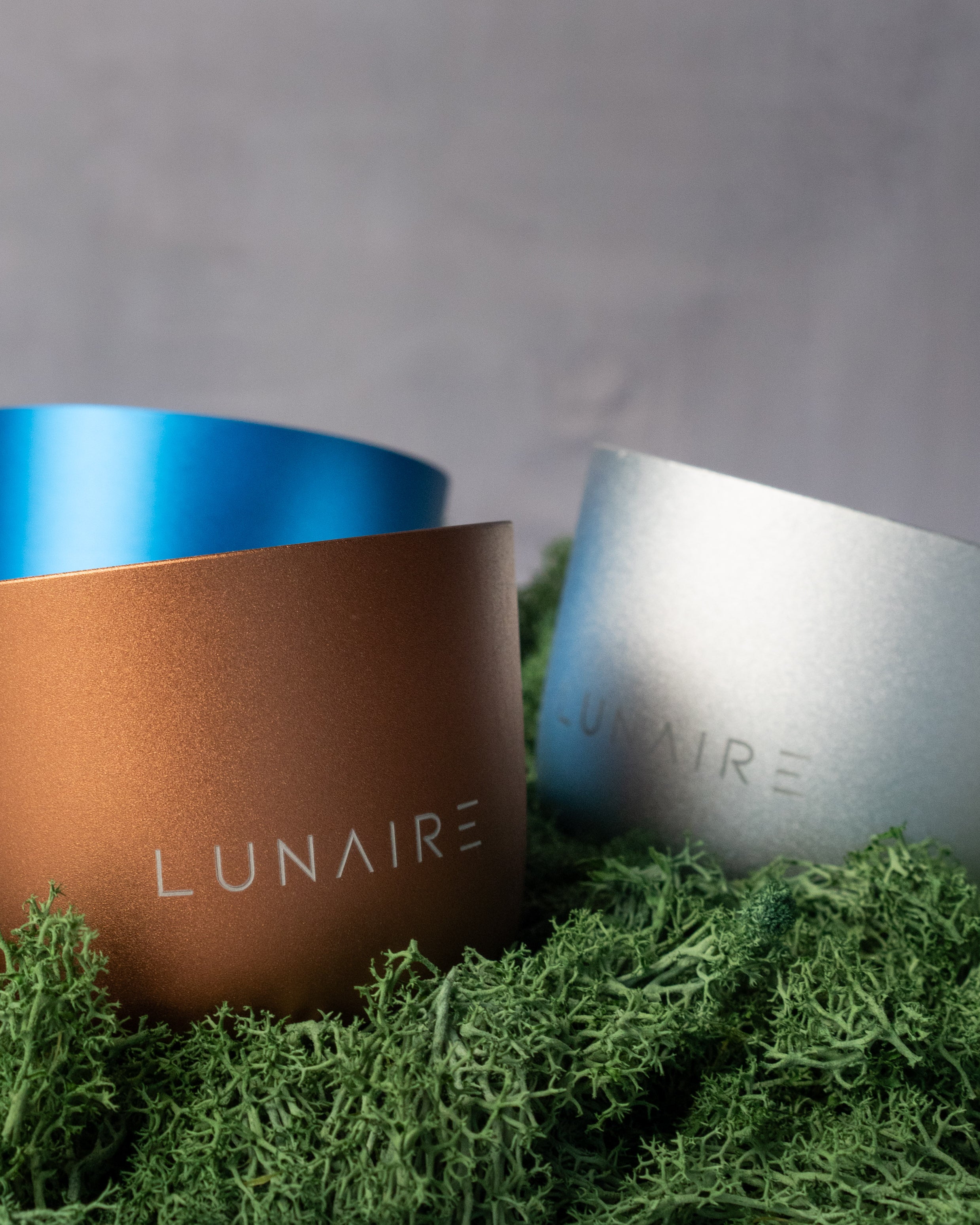
A Lunaire vessel is designed to get better with presence. It earns its place in your home. The patina of use, the way it sits on a shelf with the objects around it, the simple act of dropping in a new insert and relighting it — these are small, satisfying rituals that a throwaway candle can't replicate.
The vessel doesn't age out. It doesn't get replaced. It's a permanent resident in your home, and that permanence is part of what makes it beautiful.
|
|

5. Fragrance Range and Flexibility
Disposable Candles
You choose a new fragrance every time you buy — which can be a plus if you like variety. But you're also limited to whatever that brand has in stock. If they discontinue your favourite, you're out of luck.
Refillable Candles
With a refillable system, you choose the vessel once — and then have the freedom to try any fragrance in the refill range. Want to stay with your favourite? You can. Want to change with the season? Easy. The vessel stays constant; the scent can shift as your mood does.
Lunaire's refill range is designed to grow — new scents added regularly, with seasonal and limited edition offerings. Your vessel is an ongoing relationship with fragrance, not a single transaction.
The Verdict
Across every dimension that matters — cost over time, environmental impact, burn quality, aesthetic value, fragrance flexibility — refillable candles come out ahead. Not marginally. Clearly.
The only real argument for disposable candles is convenience and a lower barrier to entry: you don't have to invest in a vessel upfront. If you've never tried a quality candle before, a single-use option is a reasonable starting point. But once you know you love burning candles — once it's a genuine part of how you live — refillable is the obvious upgrade.
The jar you'd throw away becomes something you keep. The money you'd spend on replacements goes further. The environment takes less of a hit every time you light a match.
It's not a complicated choice. It's just a better one.